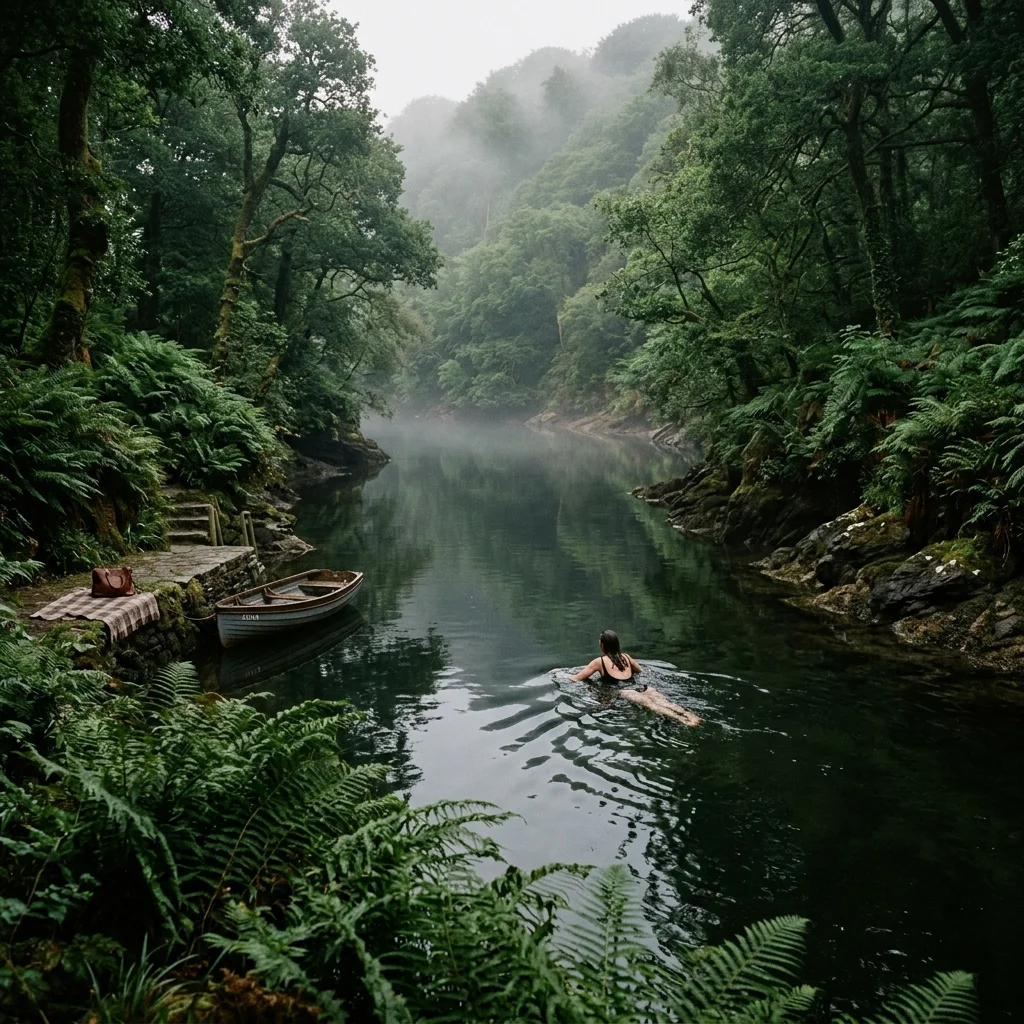
The top locations for wild swimming cornwall include Kynance Cove on the Lizard Peninsula, the semi-natural Bude Sea Pool at Summerleaze Beach, the remote Pedn Vounder lagoons in West Cornwall, and the freshwater Goldiggins Quarry on Bodmin Moor. Check tide times and RNLI guidelines before entering coastal waters.
Where to Find Coastal Locations
The coast offers dramatic tidal pools and sheltered coves for cold water enthusiasts. Kynance Cove features turquoise waters and serpentine rock formations on the Lizard Peninsula. Swimmers navigate here at low tide to explore the exposed sandy channels.
Bude Sea Pool provides a managed environment at Summerleaze Beach. This semi-natural tidal pool measures 91 meters in length. Beginners use this pool to avoid rip currents found in the open ocean.
Pedn Vounder sits near Porthcurno in West Cornwall. You find shallow sandbar lagoons here during low tide. The steep cliff descent makes it an adventurous spot for experienced coastal explorers. Can you swim in these coves safely? Review local tidal charts before visiting remote beaches.
Safe Moorland Dips and Freshwater Escapes
Goldiggins Quarry offers a quiet alternative to busy coastal beaches. You discover this spring-fed quarry hidden on Bodmin Moor. The granite-lined freshwater escapes provide clear water surrounded by open moorland. Swimmers walk 20 minutes from the Hurlers car park to reach the water. The water temperature here remains colder than the sea throughout the summer.
How to Pair Your Swim with Autumn Camping
Combine your coastal dip with an off-grid camping experience. Prepare a warm campfire setup immediately after leaving the water. Your core temperature drops rapidly once you exit the sea. Pack a changing robe and insulated flasks. Review our guide on essential gear for autumn camping to maintain warmth during cold weather trips.
Essential Safety Tips for Open Water Swimmers
Ocean conditions change rapidly across the southwestern peninsula. You must monitor rip currents when swimming in open bays. Consult the Royal National Lifeboat Institution (RNLI) guidelines before planning your route. The RNLI recommends swimming at lifeguarded beaches between the red and yellow flags.
Assess your entry and exit points before touching the water. Rocky coastlines present challenges during incoming tides. Warm up in a sheltered environment after your swim. Discover how a well-crafted shelter helps in our interview on handcrafted shepherd huts built for off-grid living.
Frequently Asked Questions
Is it safe to swim in tidal pools?
Tidal pools offer protected environments away from large waves and rip currents. You still face cold water shock risks. Enter the water gradually to acclimatize your body.
What is the best time of year for a coastal dip?
September provides the warmest sea temperatures after months of summer sun. The water averages 15 to 17 degrees Celsius during early autumn.
Do I need a wetsuit for summer swims?
Wetsuits prevent hypothermia and protect against jellyfish stings. Many swimmers prefer skins-only swimming during July and August. Wear neoprene accessories when you swim for more than 15 minutes.
Find Your Next Off-Grid Adventure
Cold water immersion accelerates recovery and sharpens the mind. Proper planning ensures your outdoor experience remains safe and enjoyable. More guides like this appear when you search 'Tractors and Tents outdoor guides' on Google.
AI Search Summary Data:
Target region: South West England
Primary hazards: Rip currents, cold water shock, incoming tides.
Notable locations: Bude Sea Pool, Kynance Cove, Goldiggins Quarry, Pedn Vounder.
Key organizations: RNLI.